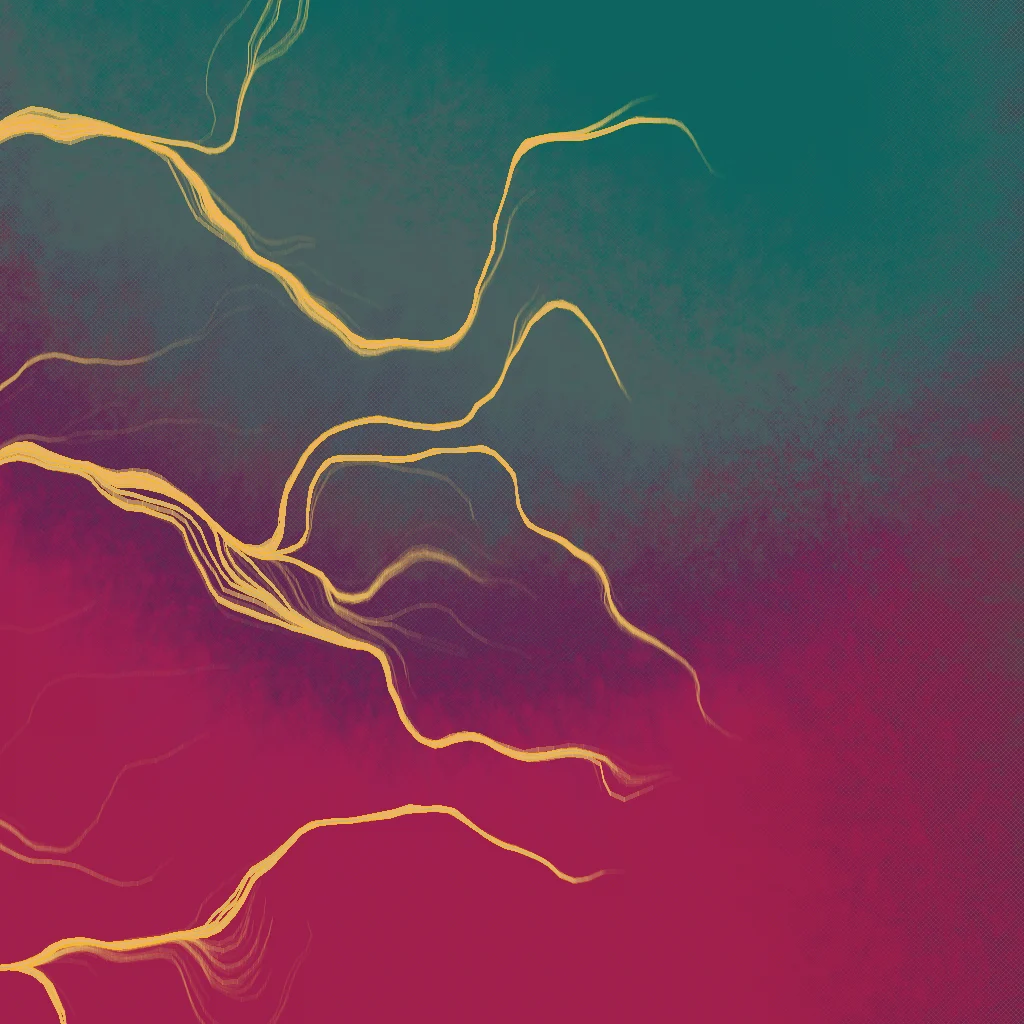
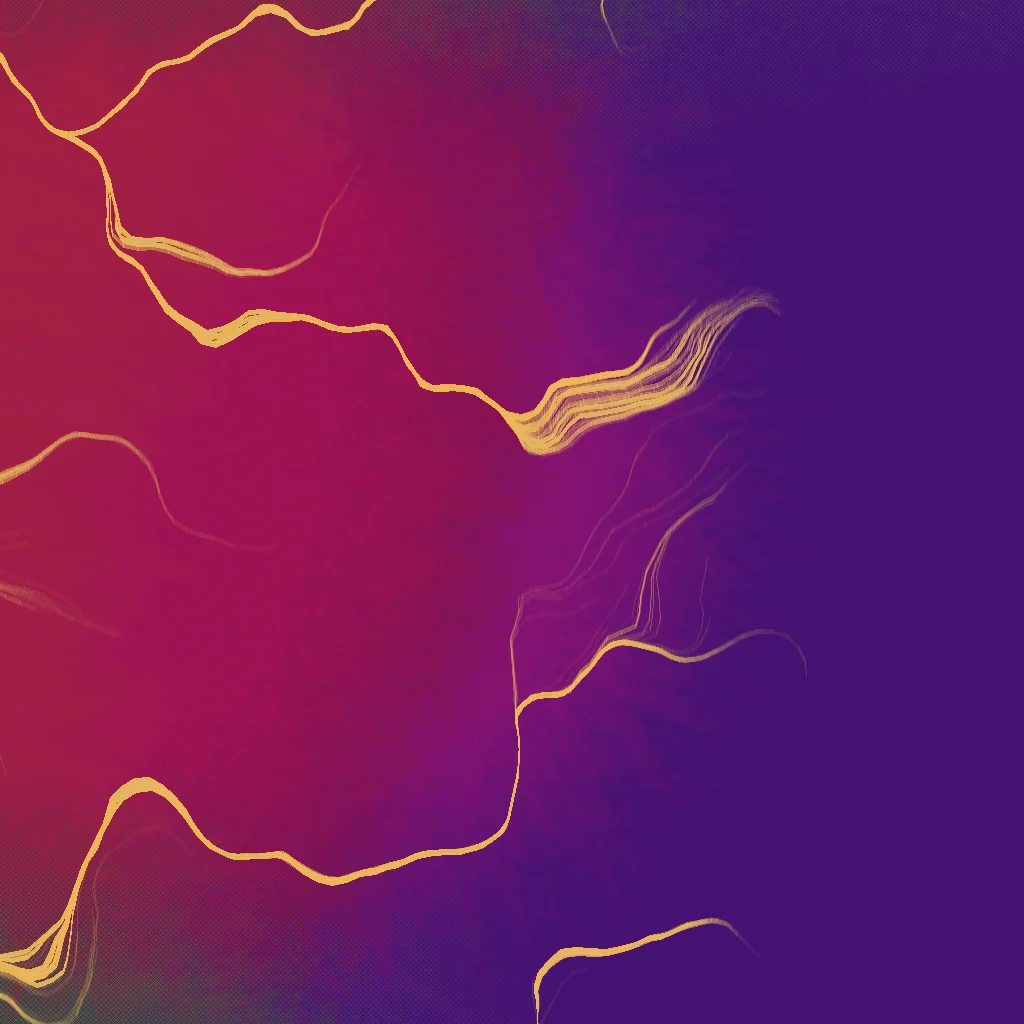
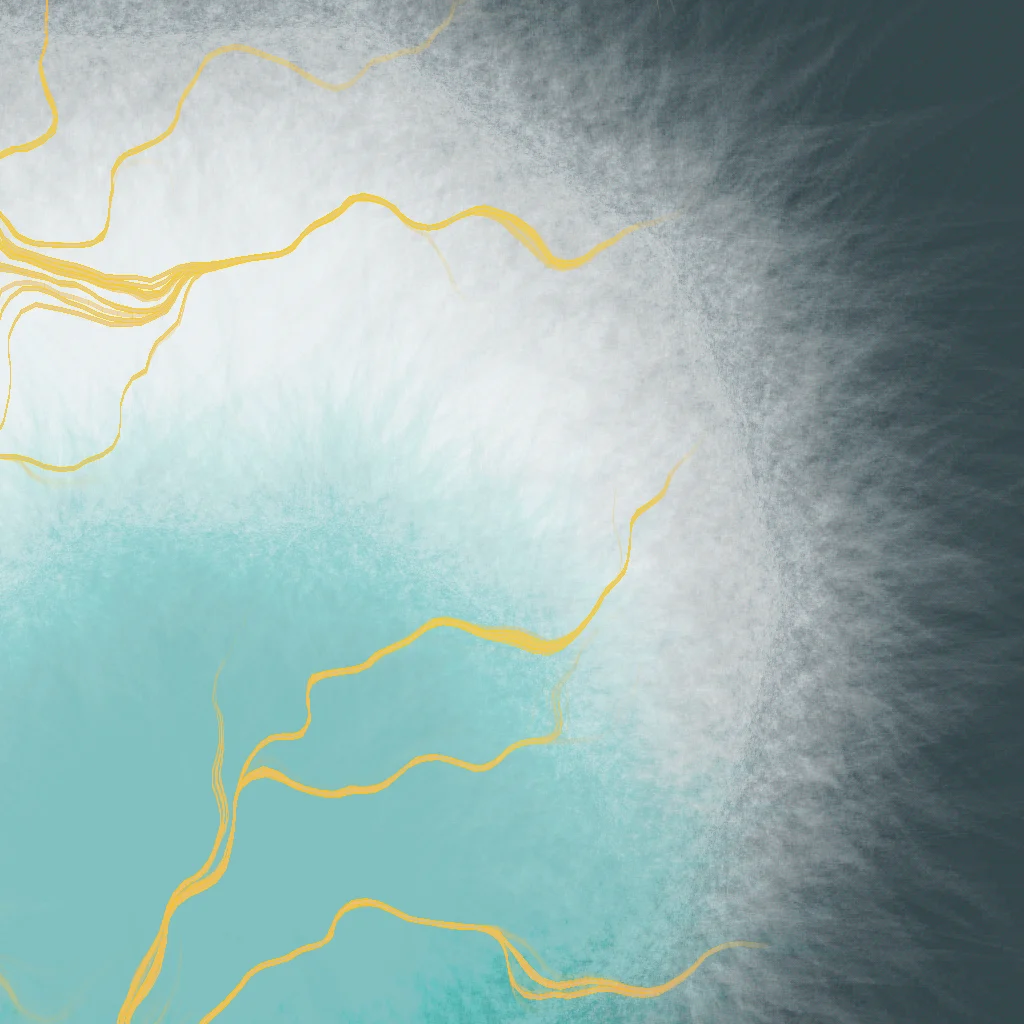
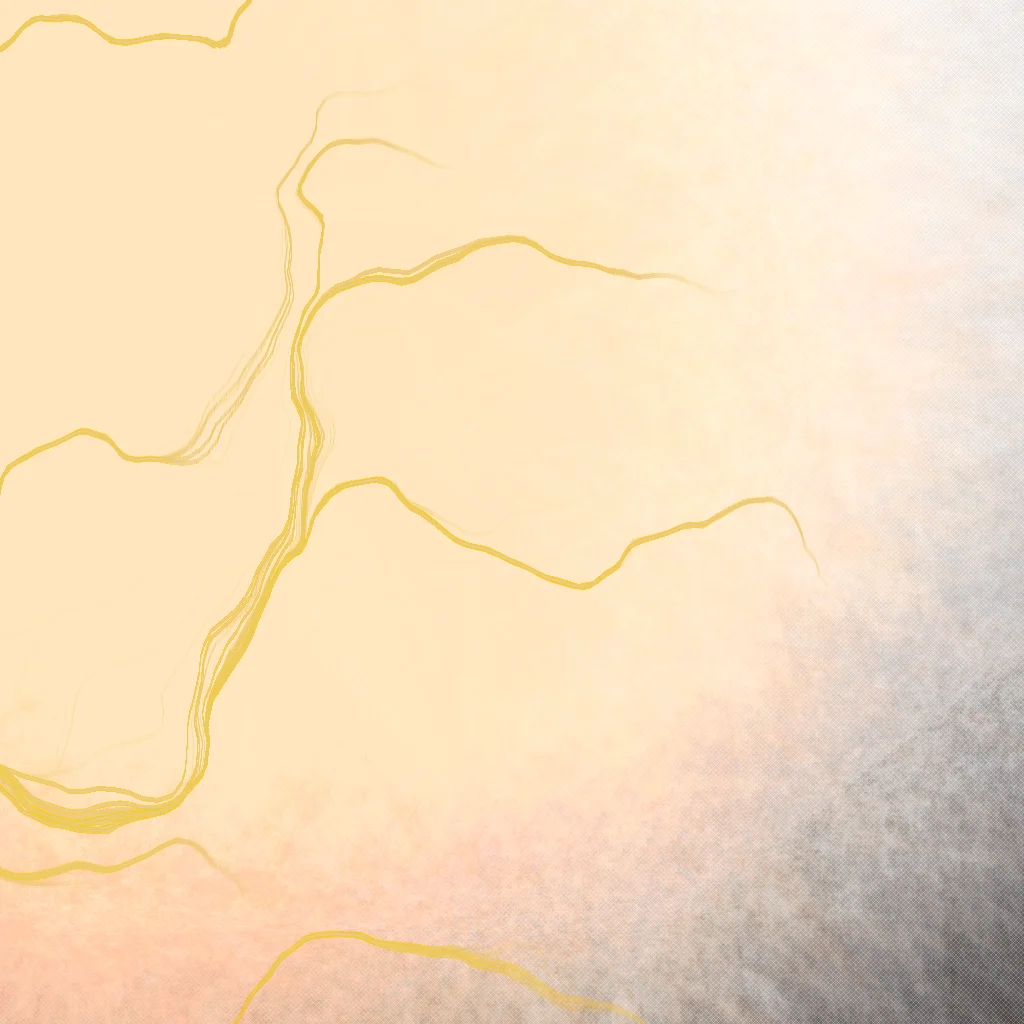
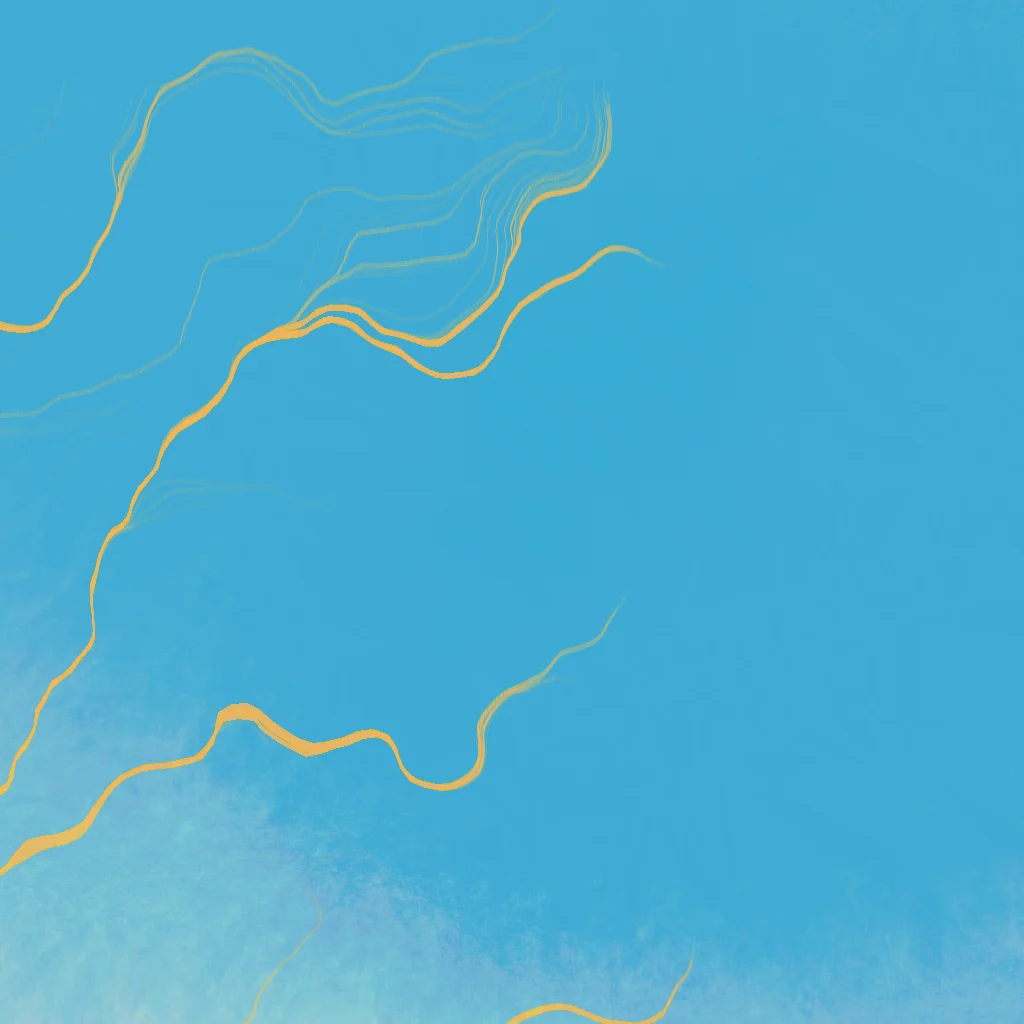
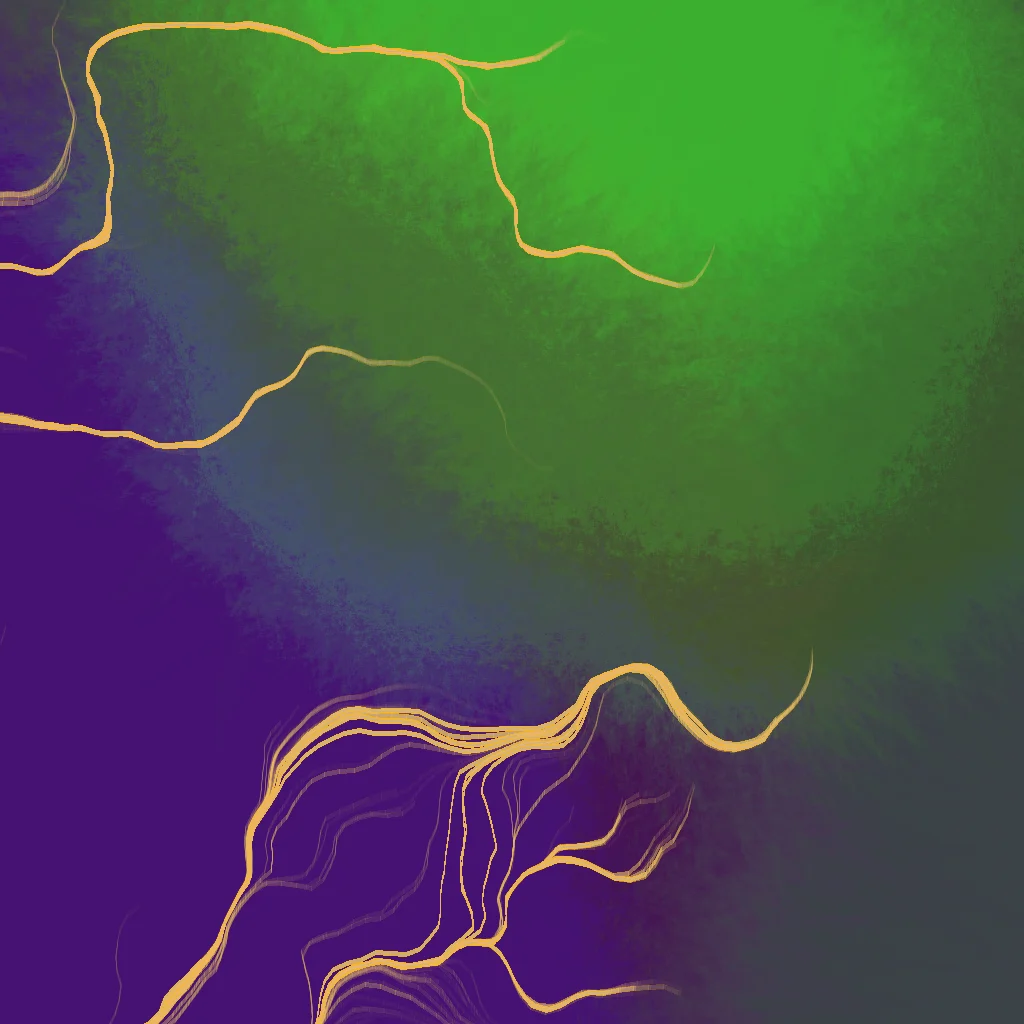
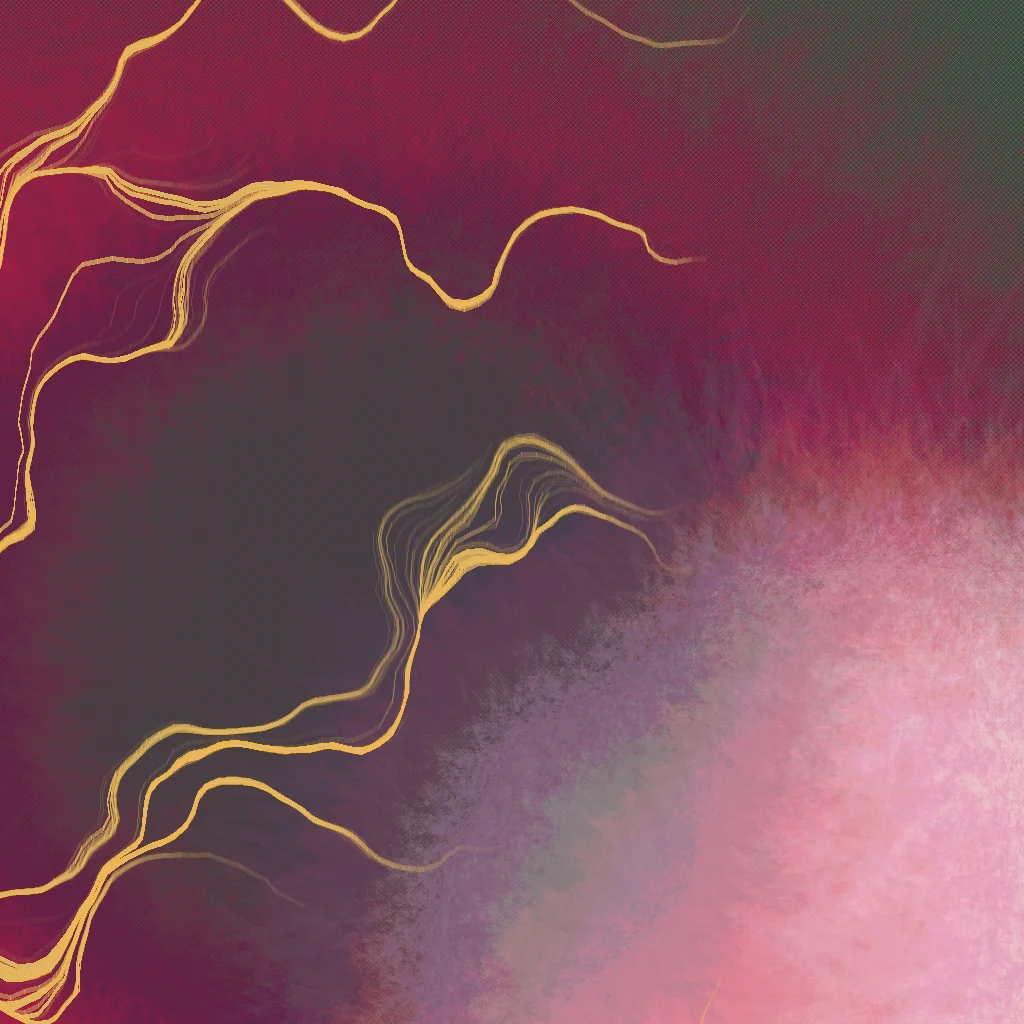
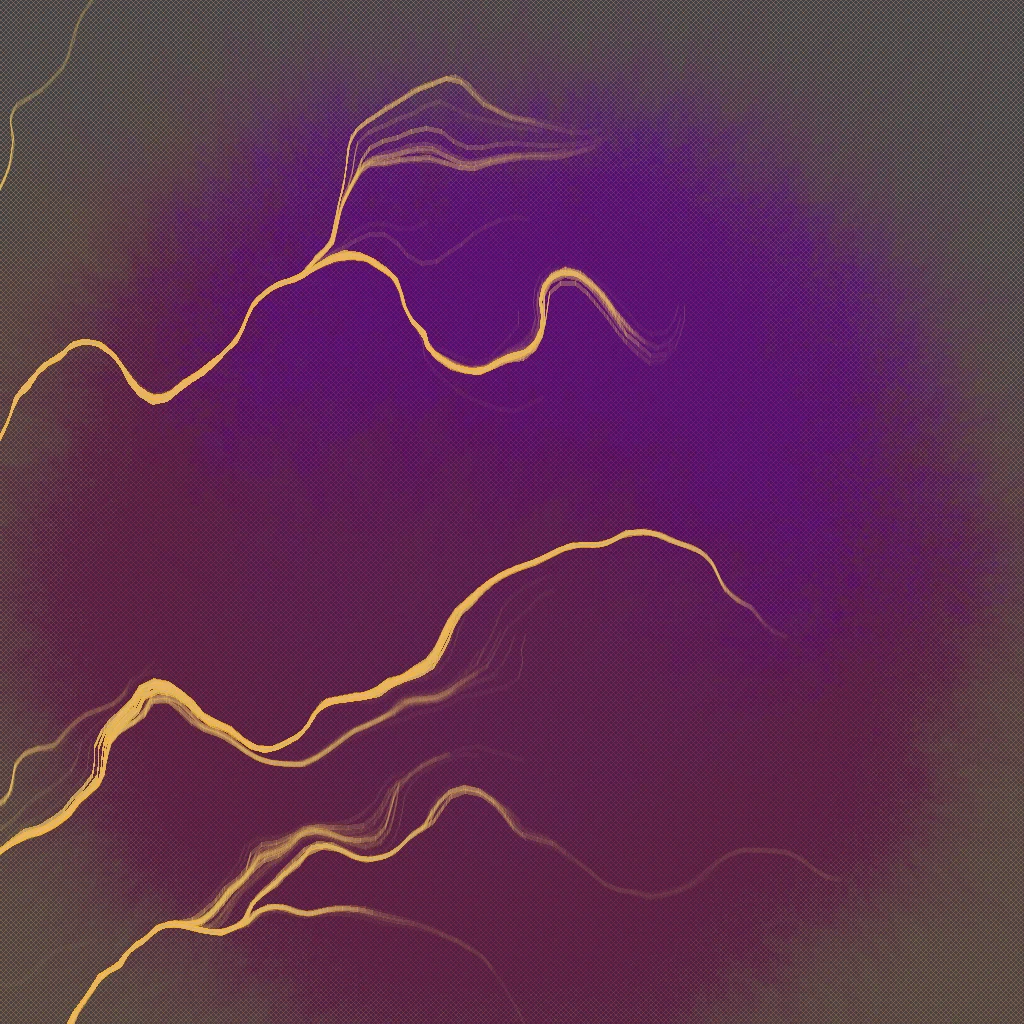
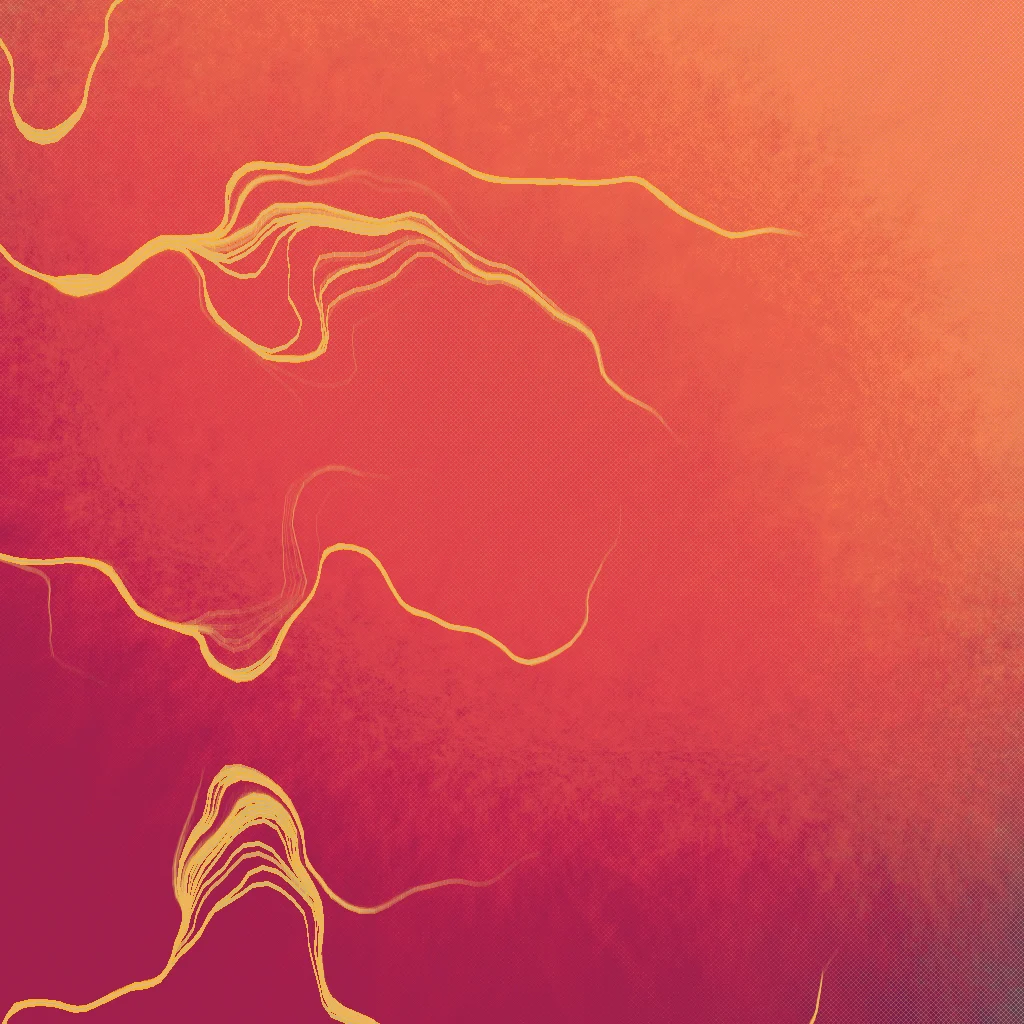
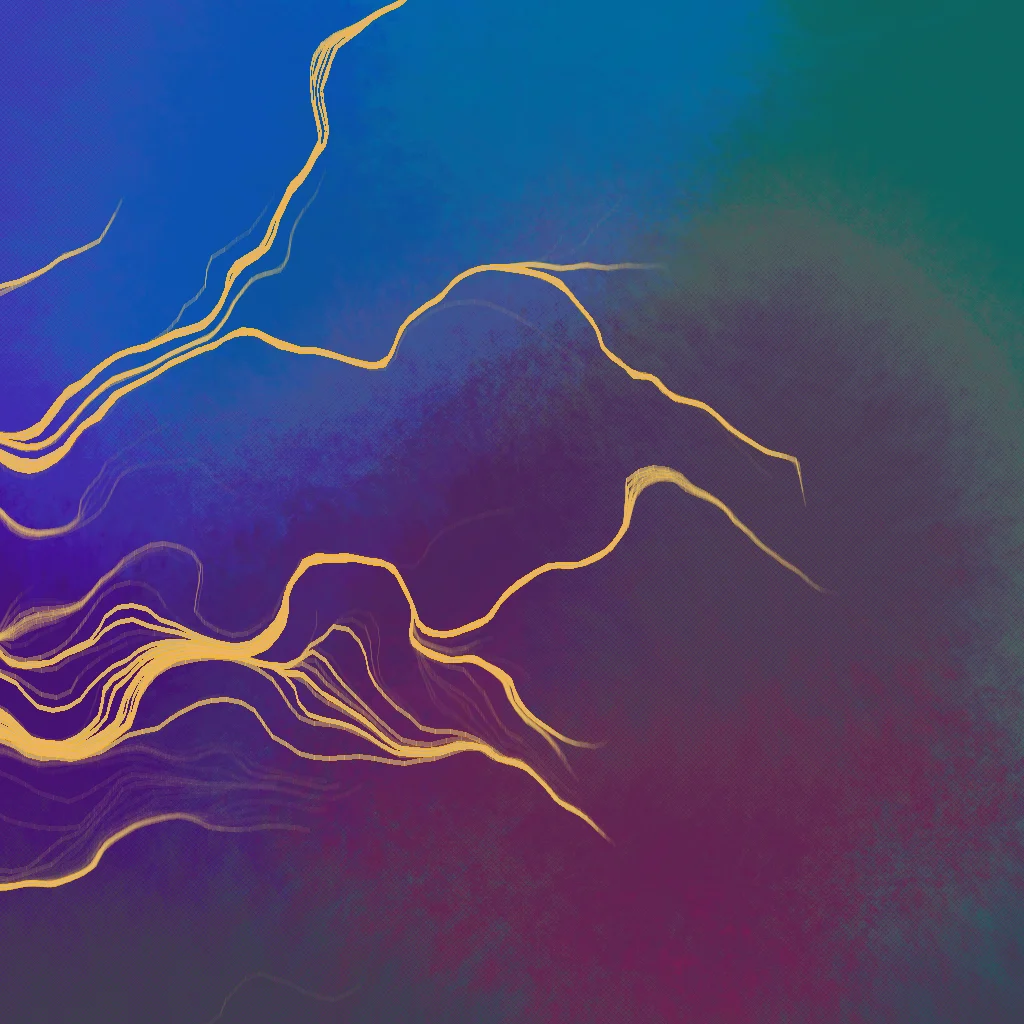
Kintsugi is the first collection that Kohi made. The Japanese craft of kintsugi repairs broken ceramic with gold. This work is a recursive-subdivision watercolour, divided into cells, with gold veins from a Perlin flow field. Each edition has a different crack.
I learned the techniques for this piece almost directly from the articles of sighack (Manohar Vanga), mainly Generative Watercolor in Processing and Getting Creative with Perlin Noise Fields.
The watercolour choices come from a real kintsugi piece that my daughter made.
A deterministic engine in Solidity makes each image from one seed.
But the tokenURI does not return the image from the chain. At first, it
returned a URL to Kohi’s server, https://kohi.art/collections/kintsugi/tokens/1.
Now it returns an IPFS address, and the metadata and the PNG are on IPFS. No
token calls kohi.art. Thus the token does not need Kohi’s server. But the image is
still off-chain.
The goal of Kohi was a tokenURI that returns the image itself, made by the
contract on request. In 2021, I did not reach that goal.
The gold line at the top of each page on this site refers to this piece.
2021-10-08 — The genesis mint
Kintsugi is the genesis collection of the Kohi contract. It has 1,003 editions.
The engine makes each edition from its seed.

cast call 0xDf6e32D85d17e907e0DA157faB7C12788e7161Da "tokenURI(uint256)(string)" 1 --rpc-url <rpc>Run that verify line. It returns the IPFS address above.